The book
The full manuscript as a PDF, an editable Word file, and plain text, with every update I ever make to it.
Agency is a business fable about Tommy, a builder who learns the expensive difference between making something impressive and making something people genuinely value.
He starts by building what he thinks should matter. He ends by learning how to see what people actually need, close the capability gap, test whether they value the result enough to choose it, use AI to deliver it better, and turn the whole thing into a business that can increasingly run and improve without him.
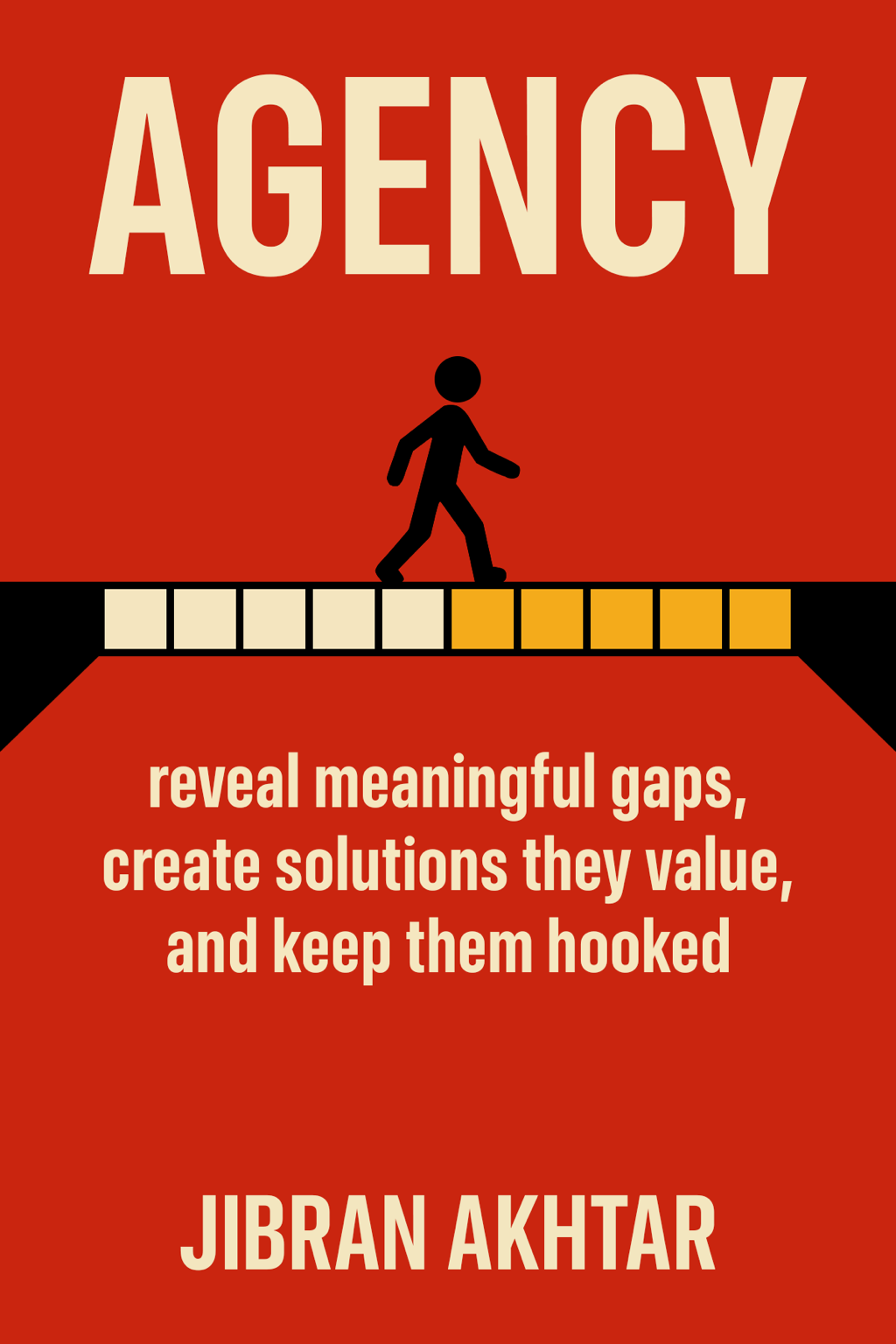
Reveal meaningful gaps. Create solutions people value. Keep giving them reasons to choose you.
Tommy begins with Strategy Tennis 1.0, a product full of features he is proud of. The market does not care. That failure forces him to learn the part of business that builders often skip: value is not what you put into the product. Value is what changes for the person using it. The rest of the story follows him from that failure to a largely autonomous business powered by AI.
Get the Founding Edition, $17Every future update is included.
Build something. Build something useful. Build something that solves a meaningful problem. Build something people will pay for.
Build something they keep choosing because it keeps making their life better. Build a system that can deliver that value with less of you in the loop. Build a system that can learn how to deliver more value over time.
The goal is not merely a product that works. The goal is more agency for the creator, the system, and the person using it.
Building is only the beginning.
Tommy learns to ask a different question. Not: “What can I build?” But: “What can this person not do now that would meaningfully move them toward what they want?”
That gap becomes the starting point. Then he tests the smallest thing that could close it, watches what the person actually does, asks whether the result mattered enough to pay for, and looks for whether they keep choosing it over time. Only then does he scale the solution.
The full manuscript as a PDF, an editable Word file, and plain text, with every update I ever make to it.
Instructions you hand to your own AI agent. It learns the four frameworks, quizzes itself, builds five skills from them, then works by the book's rules.
The workbook carries the chapter's real moments as worked cases, so every framework stays tied to the scene that taught it.
You get better at turning an idea into a real change instead of staying trapped inside what you personally know how to do.
Awareness becomes action, and action becomes a capability that did not exist before.
The AI systems you build become able to act, learn, and solve more without waiting for you at every step.
Autonomy grows only after the value loop is clear enough to automate.
The thing you create gives the person using it a capability they did not have before and helps them move toward what they actually want.
The best system does not make only the founder more powerful. It leaves everyone in the loop more capable.
Meaningful value begins with a person, becomes a repeatable result, and only then becomes an increasingly autonomous system.
Agency connects the creator’s ability to act, the system’s ability to act, and the customer’s increased ability to act.
Tommy learns AI the same way he learns business: by using it on real problems.
All three are in your Founding Edition download the same hour you buy.
The living spreadsheet that runs the book's four frameworks as sheets: the AA Framework Tracker, the ten-step flow, the Optimization Loop, and the Zero-Person Business stage map, plus a daily loop and a weekly review.
IncludedA field deck for live moments, led by the ten-minute gap-to-value loop, with the exact step names and one-line prompts on every card.
IncludedThe four-week program that maps the book's real arc, from the build trap to the self-improving venture, onto your own work with reading sequences and reflection questions.
IncludedThat is $67 of working documents, included with the $17 Founding Edition.
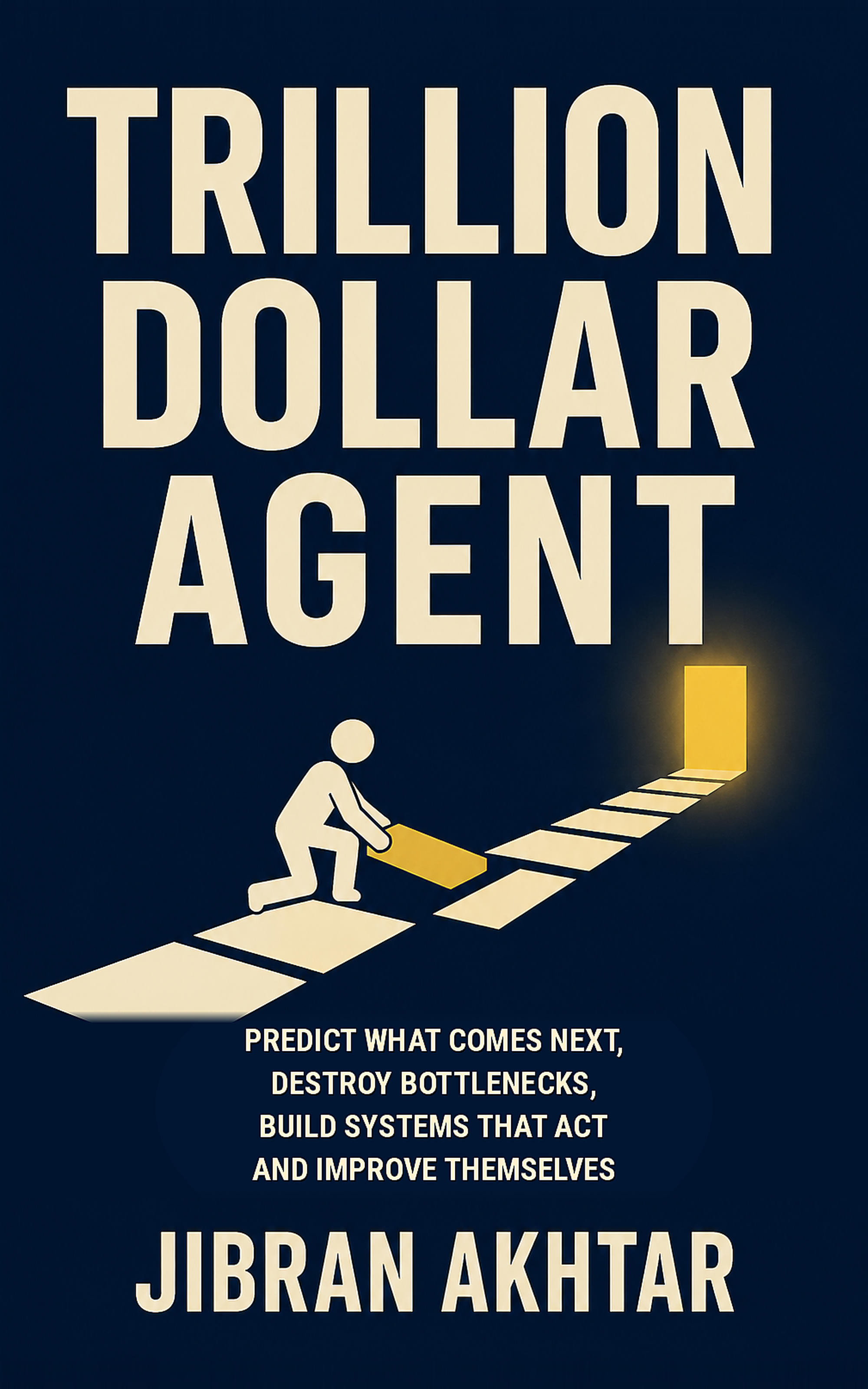
Agency asks: How do you see what matters, create something people genuinely value, and use AI to expand everyone’s ability to act?
Trillion Dollar Agent asks the next question: Once the system can act on its own, how does it know what should happen next? Read Agency first for the value-creation and autonomy foundation. Read Trillion Dollar Agent next for prediction, bottlenecks, authority, adaptation, and outcome stewardship.
From the Pursuit of Greatness series
The same operating ladder the Trillion system sells. Start where your bottleneck lives.
Both, but the order matters. Agency is about creating value first. AI enters as a way to expand what Tommy can do, what the product can do, and eventually what the business can do without him.
No. It is a business fable. The frameworks are learned through Tommy’s decisions and failures before they are named directly.
No. Tommy starts as a builder learning what AI can do and gradually moves into agents, multimodal systems, self-improving products, and a largely autonomous business.
Yes if you want the full Tommy progression. Agency teaches value creation, capability gaps, sustained preference, AI leverage, and the path to an autonomous venture. Trillion Dollar Agent begins after that system already works.